

Restaurant Food Cost Percentage: Complete Guide + Calculator
 Sep 19,2026
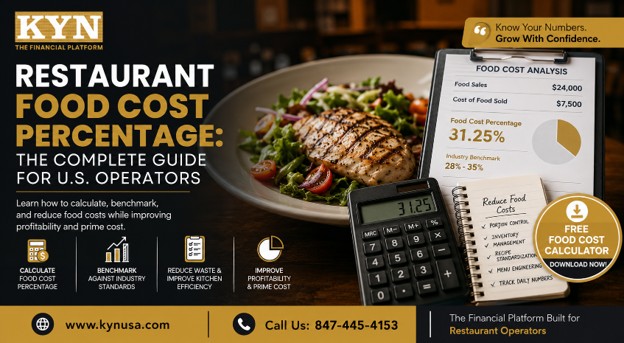
Restaurant Food Cost Percentage: The Complete Guide for U.S. Operators
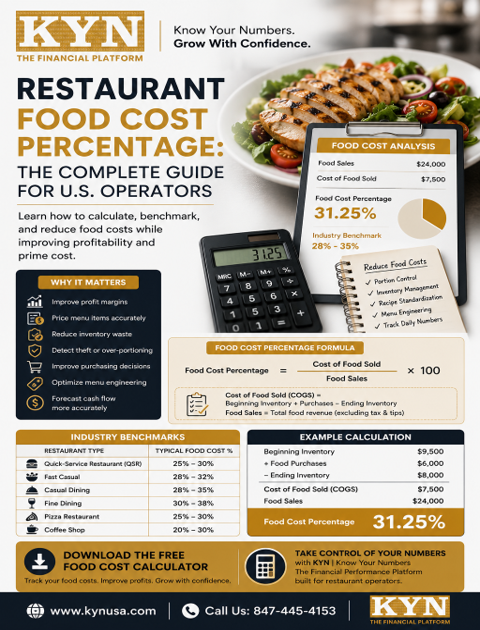
Restaurant food cost percentage measures how much of your food sales revenue goes toward ingredients. Calculated as (Cost of Food Sold ÷ Food Sales) × 100, it typically runs 28%–35% for healthy U.S. restaurants and is one half of your total prime cost.
Running a profitable restaurant isn’t just about serving great food — it’s about understanding your numbers. One of the most important metrics every restaurant owner, operator, and manager should monitor is restaurant food cost percentage.
A restaurant can be busy every night and still struggle financially if food costs are too high. Rising ingredient prices, food waste, portion inconsistencies, and poor inventory management can quickly erode profit margins. That’s why successful operators measure food costs regularly and adjust purchasing, pricing, and operations accordingly.
Knowing your restaurant food cost percentage also helps you understand your prime cost, which combines food and labor expenses. Since these are typically the two largest operating costs, controlling them is essential for long-term profitability.
At KYN | Know Your Numbers, we believe restaurant operators should have access to accurate financial data every day — not just at month-end. With daily financial insights, operators can identify cost issues early and make informed decisions that improve profitability.
In this guide, you’ll learn:
- What restaurant food cost percentage is
- How to calculate it correctly
- Industry benchmark percentages by restaurant type
- Common mistakes that increase food costs
- How food cost impacts your restaurant’s prime cost
- Practical, provable ways to improve profitability
What Is Restaurant Food Cost Percentage?
Restaurant food cost percentage measures how much of your food sales revenue is spent on food ingredients.
It answers one important question:
“For every dollar earned from food sales, how much is spent purchasing the ingredients?” |
This KPI is one of the most widely used financial metrics in the restaurant industry because it directly impacts gross profit and operating margins.
For example:
- Food Sales: $20,000
- Food Cost: $6,000
Food Cost Percentage:
($6,000 ÷ $20,000) × 100 = 30%
This means your restaurant spends 30 cents on ingredients for every dollar of food sold.
At KYN | Know Your Numbers, restaurant operators can track this percentage daily instead of waiting until month-end financial reports. Daily visibility helps identify unexpected increases in food costs before they affect profitability.
Why Restaurant Food Cost Percentage Matters
Your restaurant’s profitability depends on controlling costs while maintaining food quality and guest satisfaction.
Monitoring restaurant food cost percentage helps operators:
- Improve profit margins
- Price menu items accurately
- Reduce inventory waste
- Detect theft or over-portioning
- Improve purchasing decisions
- Track vendor price increases
- Optimize menu engineering
- Forecast cash flow more accurately
Without tracking this KPI, restaurants often discover financial issues weeks after they occur — and the cost pressure is real industry-wide.
According to the National Restaurant Association, more than 9 in 10 operators cite food, labor, insurance, energy, and swipe fees as significant cost challenges, and 42% of operators reported their restaurant was not profitable in the prior year. Wholesale food prices remain roughly 35% above pre-pandemic (February 2020) levels as of mid-2026 — which makes disciplined food cost tracking a margin necessity, not a nice-to-have.
Daily financial reporting through KYN’s Financial Performance Platform allows operators to monitor food costs alongside labor costs and other key restaurant KPIs.
Know Your Numbers. Grow With Confidence. |
Restaurant Food Cost Percentage Formula
The standard formula used across the restaurant industry is:
Food Cost Percentage = (Cost of Food Sold ÷ Food Sales) × 100
Where:
- Cost of Food Sold (COGS) = Beginning Inventory + Purchases − Ending Inventory
- Food Sales = Total food revenue (excluding tax and tips)
Restaurant Food Cost Percentage Formula
| Component | Description |
|---|---|
|
Beginning Inventory |
Inventory value at the beginning of the period |
|
Purchases |
Food purchased during the period |
|
Ending Inventory |
Inventory remaining at the end |
|
Cost of Food Sold |
Actual food consumed |
|
Food Sales |
Revenue generated from food |
This calculation provides a clear picture of how efficiently inventory is being converted into revenue.
Restaurants that calculate food cost weekly — or even daily — can respond faster to operational issues.
Step-by-Step Example
Let’s calculate restaurant food cost percentage using a simple example.
Weekly Restaurant Data
| Item | Amount |
|---|---|
|
Beginning Inventory |
$9,500 |
|
Food Purchases |
$6,000 |
|
Ending Inventory |
$8,000 |
|
Food Sales |
$24,000 |
Step 1: Calculate Cost of Food Sold
COGS = Beginning Inventory + Purchases − Ending Inventory
COGS = $9,500 + $6,000 − $8,000 = $7,500
Step 2: Calculate Food Cost Percentage
($7,500 ÷ $24,000) × 100 = 31.25%
This restaurant’s food cost percentage is 31.25%.
Using a restaurant food cost calculator can automate this process and reduce calculation errors. KYN’s platform helps operators monitor these metrics in real time, making it easier to identify trends and act before costs impact profitability.
What Is a Good Restaurant Food Cost Percentage?
There’s no single “perfect” food cost percentage. The ideal range depends on your restaurant concept, menu mix, pricing strategy, and service model.
However, many successful U.S. restaurants aim for a food cost percentage between 28% and 35%, while keeping total prime cost (food plus labor) in a healthy range through disciplined cost control and operational efficiency.
Industry Benchmarks by Restaurant Type
| Restaurant Type | Typical Food Cost % |
|---|---|
|
Quick-Service Restaurant (QSR) |
25%–30% |
|
Fast Casual |
28%–32% |
|
Casual Dining |
28%–35% |
|
Fine Dining |
30%–38% |
|
Pizza Restaurant |
25%–30% |
|
Coffee Shop |
20%–30% |
These ranges are guidelines — not rigid targets. Premium ingredients, seasonal menus, local sourcing, or specialty concepts may naturally operate with higher food costs, provided menu pricing and margins support the business model.
The most important benchmark is consistency. If your food cost percentage suddenly rises without a corresponding change in menu prices or sales mix, it’s a signal to investigate inventory practices, waste, purchasing, or portion control.
With KYN | Know Your Numbers, operators can compare daily performance against historical trends and identify unusual cost fluctuations before they become larger financial issues.
Restaurant Food Cost vs. Recipe Cost
Many restaurant owners confuse recipe cost with restaurant food cost percentage, but they measure different aspects of profitability.
Recipe Cost
Recipe cost calculates the ingredient cost of a single menu item.
Example — Cheeseburger ingredients:
- Bun
- Patty
- Cheese
- Lettuce
- Tomato
- Sauce
Total ingredient cost: $4.80
Recipe costing helps determine the appropriate selling price for individual menu items and supports effective menu engineering.
Restaurant Food Cost Percentage
Restaurant food cost percentage measures the total food consumed across the entire operation relative to food sales. It includes:
- All ingredients used
- Inventory changes
- Food waste
- Spoilage
- Portion variation
- Complimentary meals
- Kitchen mistakes
Because it reflects overall operational performance, restaurant food cost percentage is a broader financial KPI than recipe cost alone.
Leading operators use both metrics together: recipe costing ensures each menu item is priced profitably, while food cost percentage verifies that day-to-day operations are delivering those expected margins.
How Restaurant Food Cost Impacts Prime Cost
Food cost is only one piece of the profitability equation. Restaurant operators also need to manage labor cost, because together these two expenses make up prime cost — one of the most important indicators of financial health.
Prime Cost Formula
Prime Cost = Food Cost + Labor Cost
| Expense | Amount |
|---|---|
|
Food Cost |
$35,000 |
|
Labor Cost |
$42,000 |
|
Prime Cost |
$77,000 |
If total sales are $140,000:
Prime Cost Percentage: ($77,000 ÷ $140,000) × 100 = 55%
A restaurant may achieve an excellent food cost percentage, but if labor costs are too high, profitability can still suffer. Monitoring both metrics together provides a more accurate picture of operational performance.
For the full formula, worked examples, and benchmarks for this combined metric, see Restaurant Prime Cost: Formula, Examples & Benchmarks.
KYN | Know Your Numbers helps restaurant operators track food cost, labor cost, and prime cost from a single financial performance dashboard, enabling faster decisions based on daily data rather than month-end reports.
What Causes High Restaurant Food Cost Percentage?
Even restaurants with strong sales can struggle with profitability if food costs aren’t managed carefully. A consistently high restaurant food cost percentage often points to operational issues rather than a lack of customers.
Here are the most common reasons food costs increase:
1. Poor Inventory Management
Without accurate inventory counts, it's difficult to know how much product is actually being used. Overstocking can lead to spoilage, while understocking may force emergency purchases at higher prices. Best Practice: Perform inventory counts weekly — or daily for high-volume ingredients — and compare usage against sales.
2. Food Waste and Spoilage
Expired ingredients, improper storage, and overproduction all increase food costs without generating revenue. Ways to reduce waste include:
• Follow FIFO (First In, First Out) inventory rotation.
• Store ingredients at proper temperatures.
• Track waste daily and identify recurring patterns.
• Use leftovers creatively when appropriate and safe.
3. Inconsistent Portion Sizes
Serving larger portions than intended reduces profitability, even if customers are happy. Examples include:
• Extra fries
• Oversized protein portions
• Free add-ons not tracked
• Over-poured sauces
Solution: Standardize recipes, use portion scales, and train kitchen staff consistently.
4. Vendor Price Increases
Food prices fluctuate due to supply chain issues, seasonality, and inflation. Operators who don't regularly review purchasing costs may see food cost percentages rise unexpectedly. Review vendor pricing monthly and compare quotes from multiple suppliers when possible.
5. Menu Pricing That Doesn’t Reflect Costs
Many restaurants update menu prices infrequently, even as ingredient costs rise. If recipe costs increase but menu prices remain the same, margins shrink. Regular menu reviews help ensure pricing supports profitability while remaining competitive.
12 Proven Ways to Reduce Restaurant Food Cost Percentage
Reducing food cost doesn’t always mean buying cheaper ingredients. The goal is to operate more efficiently while maintaining food quality and guest satisfaction.
1. Track Food Cost Weekly — or Daily
Waiting until month-end makes it harder to correct problems quickly. Daily or weekly tracking helps identify trends early.
KYN | Know Your Numbers provides daily financial visibility, enabling operators to monitor food cost, labor cost, and other key restaurant KPIs without waiting for monthly reports.
2. Standardize Every Recipe
Create detailed recipe cards that specify:
- Ingredients
- Quantities
- Preparation steps
- Portion sizes
- Garnishes
Consistency reduces waste and improves customer experience.
3. Use Portion Control Tools
Equip your kitchen with:
- Digital scales
- Measuring cups
- Portion scoops
- Ladles
- Slice guides
Small portion variances can add thousands of dollars in annual food costs.
4. Improve Inventory Accuracy
Schedule regular inventory counts and reconcile differences between actual stock and expected usage. A reliable inventory process helps identify:
- Waste
- Theft
- Data-entry errors
- Purchasing inefficiencies
5. Reduce Menu Complexity
Large menus often require more inventory, increasing spoilage and storage costs. Consider removing low-selling items that:
- Have low margins
- Require specialty ingredients
- Slow kitchen operations
6. Engineer Your Menu
Menu engineering helps promote items with the highest profitability. Analyze each menu item based on:
- Food cost
- Popularity
- Contribution margin
Highlight high-margin items with strategic placement, photos (where appropriate), or server recommendations.
7. Negotiate With Suppliers
Strong supplier relationships can lead to:
- Better pricing
- Volume discounts
- Seasonal purchasing opportunities
- Improved payment terms
Review contracts periodically to ensure you’re receiving competitive rates.
8. Train Your Team
Kitchen staff should understand why food cost matters. Training should cover:
- Portion consistency
- Proper storage
- Waste reduction
- Inventory procedures
- Accurate preparation techniques
9. Monitor Waste Daily
Create a waste log that records:
- Item discarded
- Quantity
- Reason
- Date
- Employee (if applicable)
Regular reviews help identify recurring issues and opportunities for improvement.
10. Forecast Demand More Accurately
Sales forecasting helps kitchens prepare the right amount of food. Good forecasting reduces:
- Overstocking
- Emergency purchases
- Food waste
- Labor inefficiencies
11. Audit High-Cost Ingredients
Items such as steak, seafood, cheese, and specialty oils have a significant impact on food cost. Monitor:
- Portion sizes
- Yield
- Waste
- Vendor pricing
12. Monitor Prime Cost Together
Food cost alone doesn’t tell the full story. Track:
- Food Cost %
- Labor Cost %
- Prime Cost %
- Sales Trends
KYN’s Financial Performance Platform brings these metrics together in one dashboard, helping operators make faster, data-driven decisions.
Why Use a Restaurant Food Cost Calculator?
A restaurant food cost calculator simplifies one of the most important financial calculations in restaurant management. Instead of relying on spreadsheets or manual calculations, a calculator helps you:
- Calculate food cost percentage accurately
- Compare weekly or monthly performance
- Monitor cost trends
- Evaluate menu pricing decisions
- Improve forecasting
For growing restaurants and multi-location operators, automation also reduces errors and saves valuable time.
Download KYN’s Free Food Cost Calculator to streamline your calculations and support better financial decisions. |
Restaurant Food Cost and Menu Engineering
Food cost percentage should never be analyzed in isolation. It works best when combined with menu engineering. A balanced menu includes:
- High-margin, high-popularity items (Stars)
- High-margin, low-popularity items (Puzzles)
- Low-margin, high-popularity items (Plow Horses)
- Low-margin, low-popularity items (Dogs)
Regularly reviewing these categories helps optimize pricing, promotions, and menu design.
Restaurant KPIs to Track Alongside Food Cost
Food cost percentage is one of several critical restaurant KPIs. For a full breakdown of the top metrics to monitor, see Top 5 Restaurant KPIs Every Owner Must Track. Operators should also monitor:
| KPI | Why It Matters |
|---|---|
|
Food Cost % |
Tracks ingredient spending |
|
Labor Cost % |
Measures staffing efficiency |
|
Prime Cost % |
Combined food and labor costs |
|
Gross Profit Margin |
Indicates profitability before operating expenses |
|
Inventory Turnover |
Shows how efficiently inventory is used |
|
Average Check Size |
Measures guest spending |
|
Sales Per Labor Hour |
Evaluates workforce productivity |
|
Net Profit Margin |
Reflects overall financial performance |
Tracking these KPIs together provides a complete picture of restaurant performance.
How KYN Helps
Most restaurant accounting systems tell you what happened last month. KYN | Know Your Numbers is a Financial Performance Platform built for restaurant operators — not accountants — that shows food cost, labor cost, and prime cost daily, so you can catch a cost spike while it’s still a small problem instead of a month-end surprise.
With KYN, operators can:
- See food cost percentage update daily instead of waiting for month-end statements
- Compare performance against the benchmarks in this guide, by concept and by location
- Track food cost, labor cost, and prime cost together on one dashboard
- Spot unusual cost fluctuations before they erode margin
Curious what daily visibility looks like for your restaurant? Book a Demo and see KYN on your own numbers.
Common Mistakes to Avoid
Avoid these common errors when calculating or managing restaurant food cost percentage:
- Using purchase costs instead of Cost of Goods Sold (COGS)
- Skipping inventory counts
- Ignoring waste and spoilage
- Inconsistent recipe costing
- Failing to update menu prices
- Not monitoring vendor price changes
- Tracking food cost monthly instead of weekly or daily
- Looking only at food cost without considering labor and prime cost
FAQs
1 What is a good restaurant food cost percentage?
2 How often should food cost percentage be calculated?
3 What is the difference between food cost and prime cost?
4 Why is my restaurant food cost percentage increasing?
5 Can software help reduce food costs?
Final Thoughts
Understanding your restaurant food cost percentage is one of the most effective ways to improve profitability and build a financially healthy restaurant.
Accurate calculations, disciplined inventory management, recipe costing, menu engineering, and consistent monitoring all contribute to better financial outcomes. Just as importantly, food cost should always be viewed alongside labor cost to understand your restaurant’s prime cost.
Rather than waiting for month-end financial statements, successful operators review key metrics regularly and use real-time data to guide decisions.
That’s where KYN | Know Your Numbers helps. As a Financial Performance Platform built for restaurant operators, KYN provides daily visibility into food cost, labor, prime cost, and other essential restaurant KPIs — so you can identify issues earlier and take action with confidence.
Download KYN’s Free Food Cost Calculator Get one number that matters in your inbox every week — subscribe to the KYN newsletter. Know Your Numbers. Grow With Confidence. |